Pronunciation (approximate): IPA /ˈɔfɪs əv ði ˌɪŋkwɪˈzɪʃən/ · English: AW-fiss uv thee ink-wih-ZISH-un
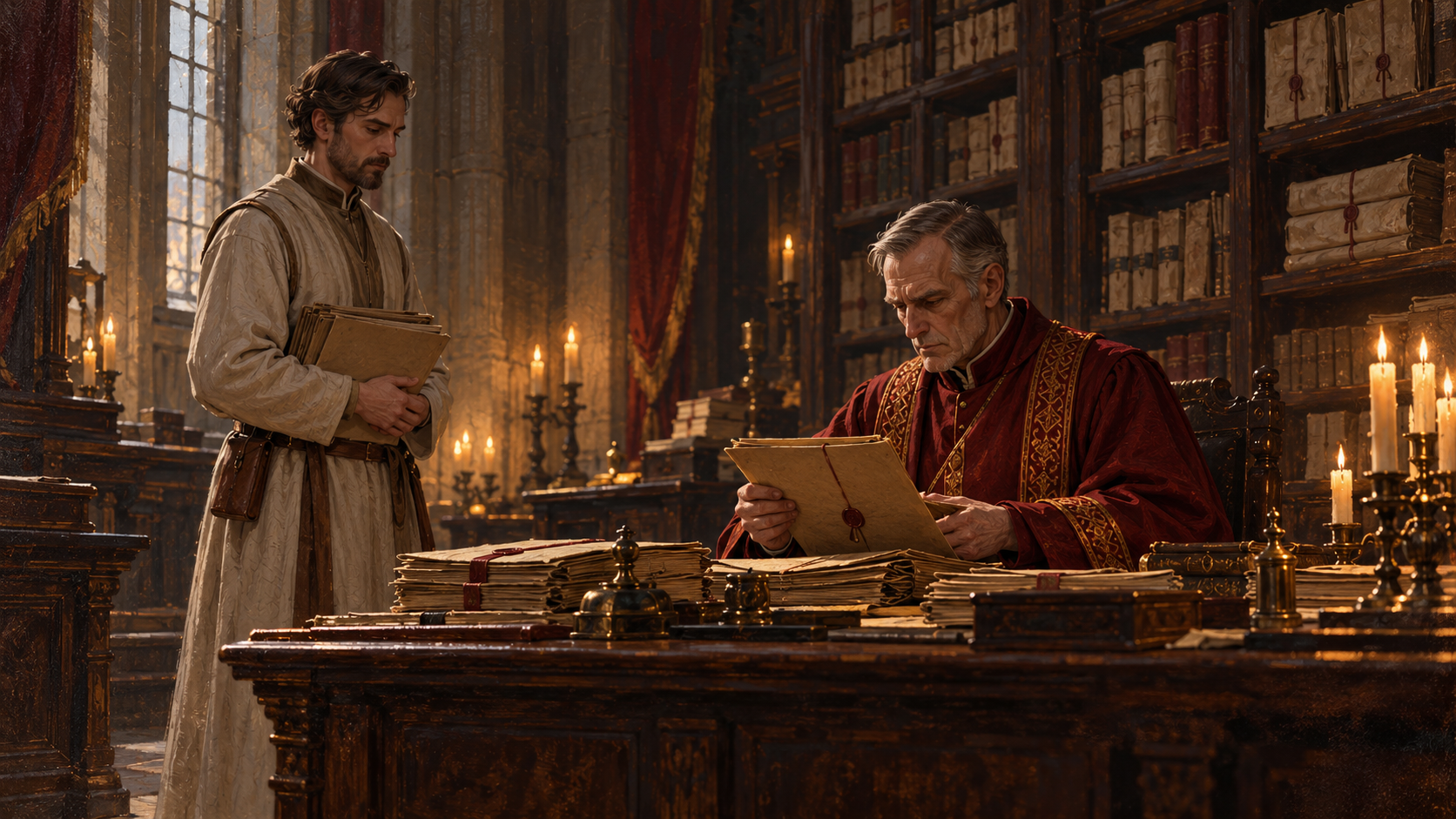
The Office of the Inquisition was the Imperian institution charged with enforcing doctrinal alignment and investigating institutional danger. The Banner and Pyre account distinguishes it from the Church’s teaching role while describing functions spanning investigation, judgment, and intelligence. Banner and Pyre source.
Mandate and Oversight
The account gives the Inquisition broad access to records and authority to investigate officeholders, nobles, senators, and military commanders. It presents oversight as a response to the amplified consequences of errors by people holding power. Noble rank was therefore a reason for scrutiny rather than an exemption. The source’s description of a mandate derived from the Covenant belongs to its account of institutional legitimacy, not a newly confirmed origin event. Banner and Pyre source.
Investigation and Correction
Inquisitorial inquiry assessed whether people or institutions could be corrected and reintegrated. Its record describes preventive intervention based on patterns, risk, and precedent, together with preservation of judgments for future decisions. The source’s language of restoring coherence explains the office’s rationale; it does not independently validate its accusations or methods. Banner and Pyre source.
Authority and Its Recorded Exception
The Banner and Pyre entry describes jurisdiction in sweeping terms. The surviving Holy Imperia account also expressly exempts those under vows of silence from compelled testimony. That exception remains in force in this archive; the broader wording is not used to erase it. The later source’s permission for selective disclosure and misdirection likewise does not replace the Game Master’s general distinction between Imperian sincerity and accuracy. October cultural clarification. Banner and Pyre source.
Azelia’s Service
The October record confirms that Azelia Bartholomew was confronted with inquisitorial service or death and chose service. Grand Inquisitors later supplied intelligence guiding her accumulation of powerful items. The Church also held the Arms of Gabriel station in relation to her. These established events belong to Midnight’s Ascension; the wider institutional account supplies no additional cases or named instructors for her. Current account of Azelia.
Historical Scope
The source describes Imperia and its institutions in their own historical setting. It does not locate this institution within an exact reign or establish its survival into the campaign present. The current record of Holy Imperia ends with Sonata’s death more than 6,000 years ago; the empire’s later fate remains unknown. Current chronology clarification.
Sources
- Banner and Pyre lore export: Office of the Inquisition.
- Game Master historical clarifications, October 23, 2026: historical limits and current family/divine canon.
Related Articles
The Present-Day City Account
The Eternal City Inquisitors article records the modern Temple Headquarters and the chapter structure described in Petorin’s briefing. The relationship between the modern chapters and the historical Imperian Office remains unestablished.