Pronunciation (approximate): IPA /ˈsoʊlɚ ˈɡeɪbriəl fɝst əv maʊnt səˈlɛstiə/ · English: SOH-ler GAY-bree-uhl, FURST uv MOWNT suh-LES-tee-uh
Gabriel, the Solar of Mount Celestia, began life as the human Isaac Featherstone. Sacrifice in protection of his earthly lover Axhia led him into the Imperian Church’s paladin service and ultimately to angelic rank. He blesses the appointed station called the Arms of Gabriel. GM source; GM source.
The Holy Father
Gabriel, the Solar of Mount Celestia, is revered in Holy Imperia as its spiritual father. Imperian tradition presents him as a figure of purity, divine love, and paternal authority: radiant and angelic even as the empire's other sacred images change with the age.
The campaign's history names him Isaac Featherstone in mortal life, a human paladin and angel of the Church. With Glasya, also called Axhia Der Kirik, he is the father of Azelia Bartholomew, who became Midnight. Their daughter's celestial and infernal inheritance shapes her place in the world, but the archive describes her divinity as something she won through struggle.
Love and Defiance
Gabriel's words about Glasya preserve a tenderness that stands beside his public authority: They called her profane, but I saw only sanctity—raw, wild, and perfect in its honesty.
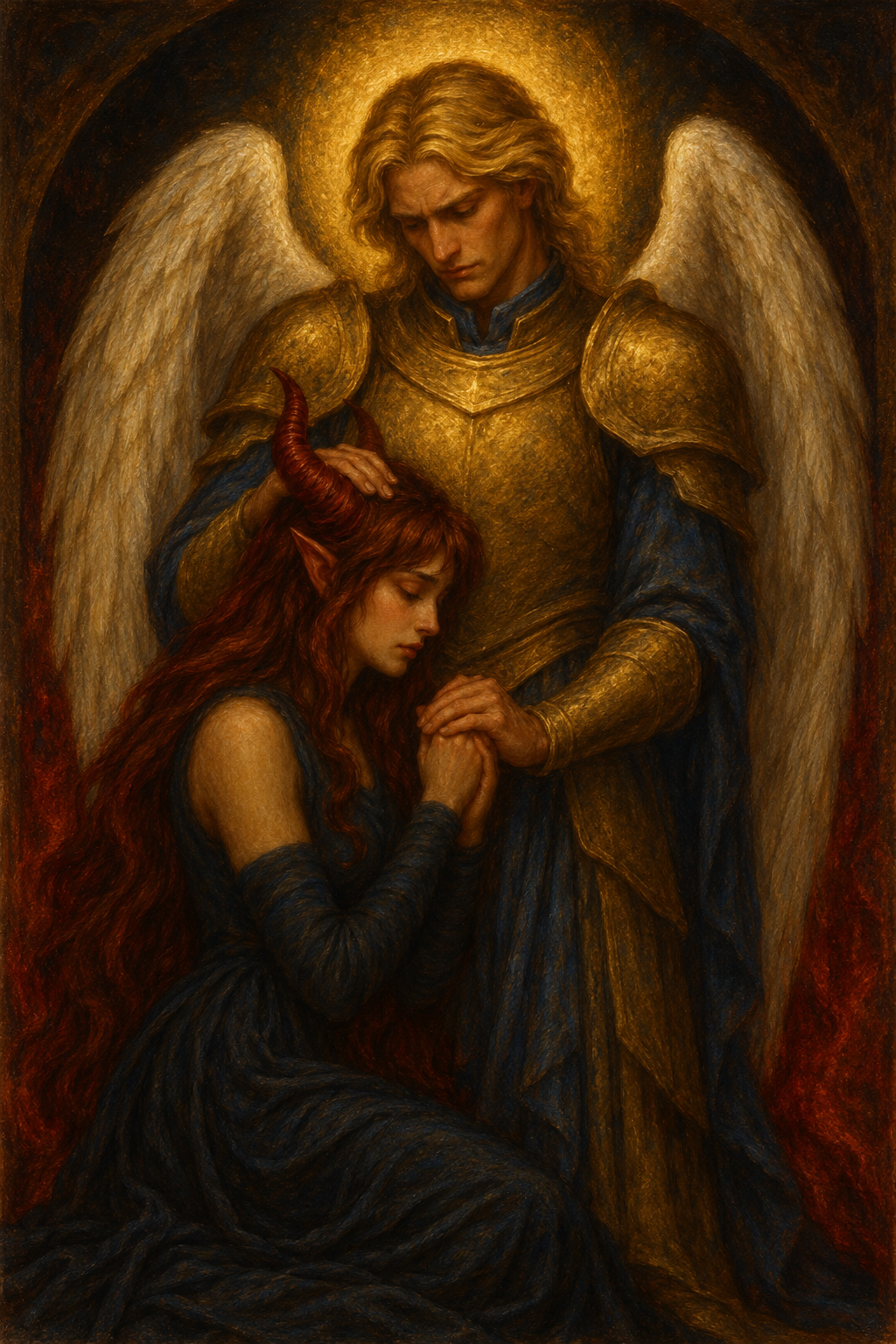
The campaign's devotional painting gives that love a symbolic form: Glasya kneels in unquestioning devotion while Gabriel receives her hands and rests a hand upon her hair.
Midnight's own words expose a different bond: My father is the only god I believe in, and that is why I must destroy him.
The archive preserves this declaration without yet explaining the full history of their estrangement.
What the Party Has Learned
The July 25 notes describe Gabriel as a rebel messenger Solar and record a statue of him above the stairs. They name his consort as Glasya, a princess of Hell and overseer of its prison, and attribute to their union a purpose of bringing down the goddess of magic. This is history reported in the notes.
During the August 1 celestial vision, a voice charges Dina with overthrowing Gabriel's tyranny and says Midnight holds the weapon needed to release the angels. These are the vision's claims, leaving the party to reconcile them with the Holy Father's veneration in Imperia.
Portrait and Unresolved History
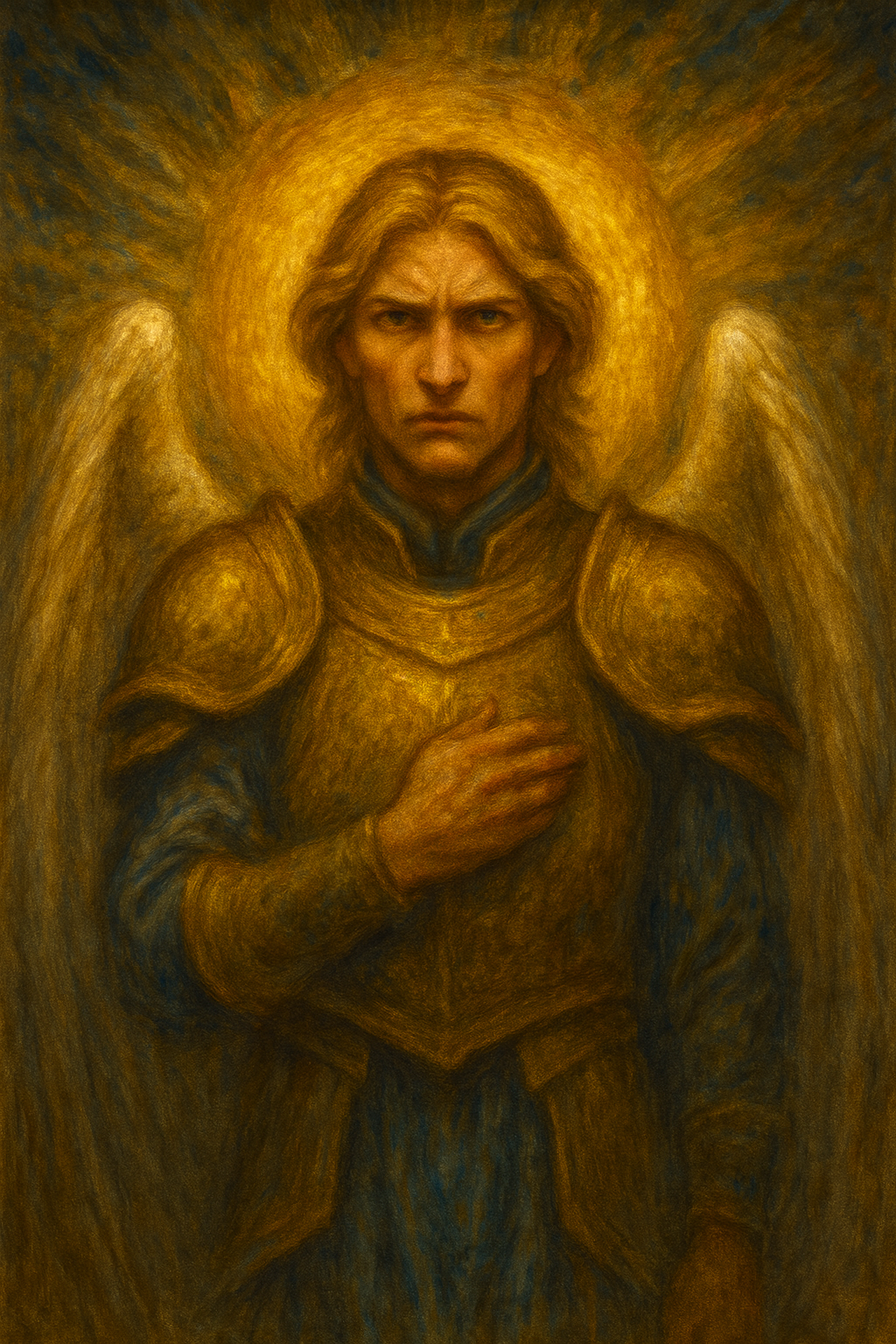
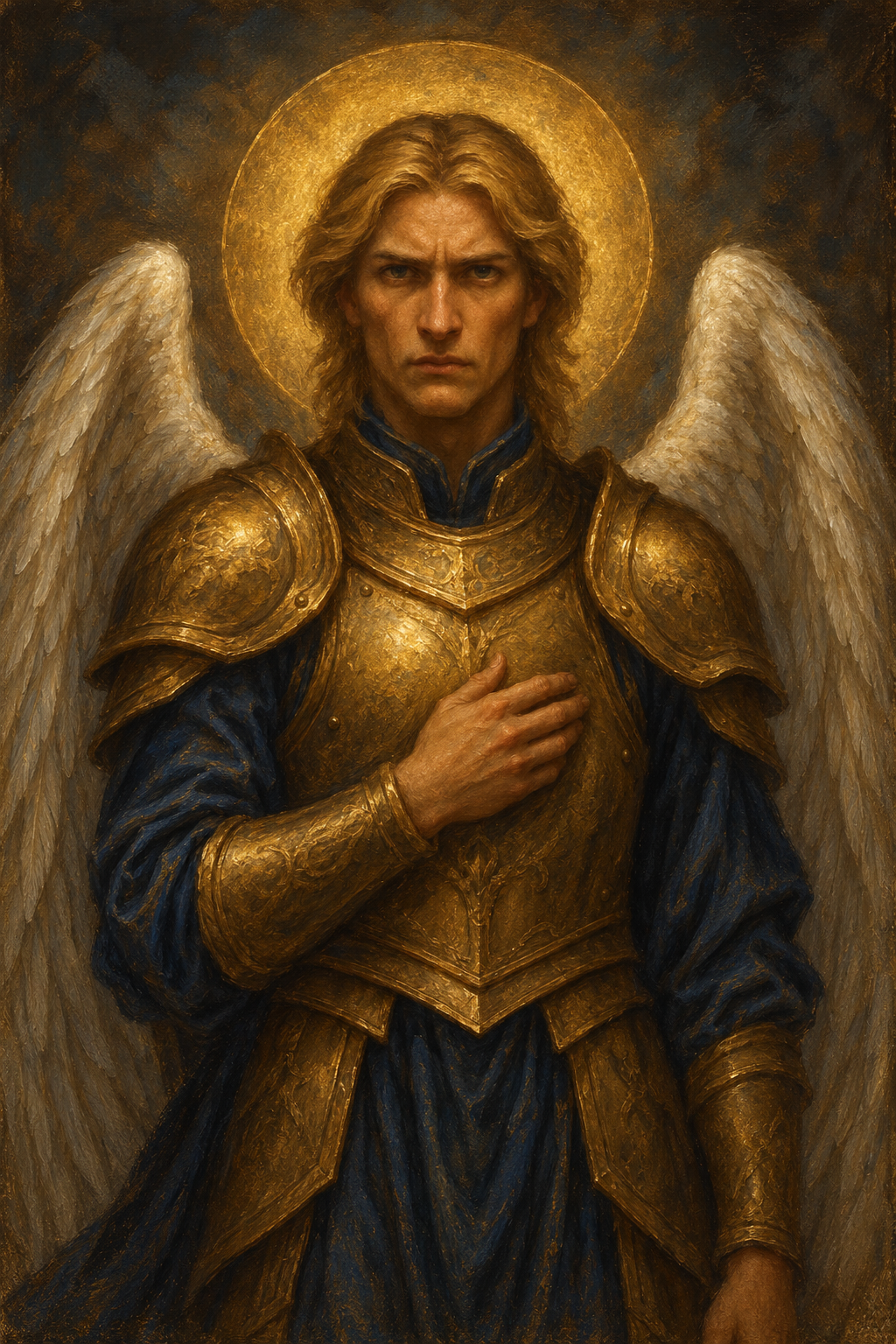
His refreshed oil-painting reference preserves his long golden hair, circular halo, white feathered wings, and gold armor over navy clothing. The original portrait remains available in the gallery. The shared devotion image is a symbolic campaign illustration; its use in any formal cult rite remains unconfirmed.
The Game Master confirms that Isaac was born human, became a paladin through sacrifice to protect Axhia, and ascended to angelic rank. The cause of his rebellion and the full nature of his relationship to the One remain open. GM source.
Character reference
- Age
- Unknown
- Height
- Unknown
- Weight
- Unknown
- Blood type
- Unknown
- Affiliations
- Mount Celestia; Holy Imperia and its Church, where he is revered as Holy Father
- Personality Type
- Unassigned
- Accent
- Unspecified
- Handedness
- Right-handed. Imperian equipment required right-handed use.
Campaign Sources
This is Midnight's Eclipse campaign lore. Sources: Holy Imperia; Midnight; the original Gabriel and Glasya archive quotations; and the July 25–August 8 session transcripts. See also the Cult of the One for the current investigation and devotional illustration.
The Arms of Gabriel
The August 1–8 notes connect Dina's celestial inheritance to the Arms of Gabriel, described as ancient keepers of secrets and weapons. The party was told to return to Midnight's tomb and obtain a petition signed by a sage and a Daughter of the Eclipse to seek a weapon from them. The notes also mention the Daughters of Eternity in the Arms' troubled history, but do not clearly establish that history or the Arms' present relationship to Gabriel. Source: the celestial vision and August 8 notes.
Service, Sacrifice, and the Arms
The story says Isaac ultimately gave his life in Sonata’s war to protect Axhia. GM source [claim]
The Arms of Gabriel is a blessed, appointed station that protects and shepherds a coming cycle or the rise of a deity. Isaac served as the Arms to Axhia; this station is distinct from Gabriel himself. The earlier session language about keepers of weapons records what the party was told, rather than defining every historical holder. GM source.
Family and Time
Gabriel and Glasya bent and looped time and displaced their own family to ensure Azelia became Midnight in every iteration. The mechanism, sequence of interventions, and relationship to named historical periods are unknown. These interventions do not define the Cycle/Epoch hierarchy. GM source.
Imperian Religious Interpretation
The shared-world Faith of Man account portrays Gabriel as the guardian and executor of divine authority, concerned with humanity’s collective continuation. Its holy-text outline names The Words of the Archangel, and its afterlife teaching places the faithful in continued service under his command. Those are attributed religious interpretations. The older account’s origin and Covenant narrative do not replace Isaac Featherstone’s confirmed human birth, paladin service, ascent, family relationships, or the unresolved sequence of the family’s time interventions. The belief in a final host does not identify the campaign’s End War. Banner and Pyre source. Banner and Pyre source.
Sources
Banner and Pyre: preserved shared-world lore export, with individual source anchors cited in the institutional context above.
Game Master history answers, October 23, 2026; chronology anchors and clarifications. Earlier archive and session sources remain linked alongside their statements above.
Related Articles
The Temple of Gabriel
The November 7 expedition visits the lakeside Temple of Gabriel, named for Gabriel. Its concealed Judgment route leads to Glasya’s court in Malbolge. Gabriel’s presence at the temple or the audience is unrecorded.